
The Day
of Infamy

This an eye witness account of what really happened On December 7th at Clark’s Field (December 8th in the Philippines) - where the vast majority of American’s Pacific Air Core was locked and loaded but on the ground.
In 1981 A colonel in the US Air Force (Shane)interviewed Major Aloysius Suttmann while studying for her Ph.D. for eighteen hours on his war experience. Big Al, as he came to be known, is the witness.
An excerpt of his recorded translating (available in the book Faithful: Because of Love a True story of the Defenders of Bataan - available at Amazon by searching Faithful: Clement Charles.
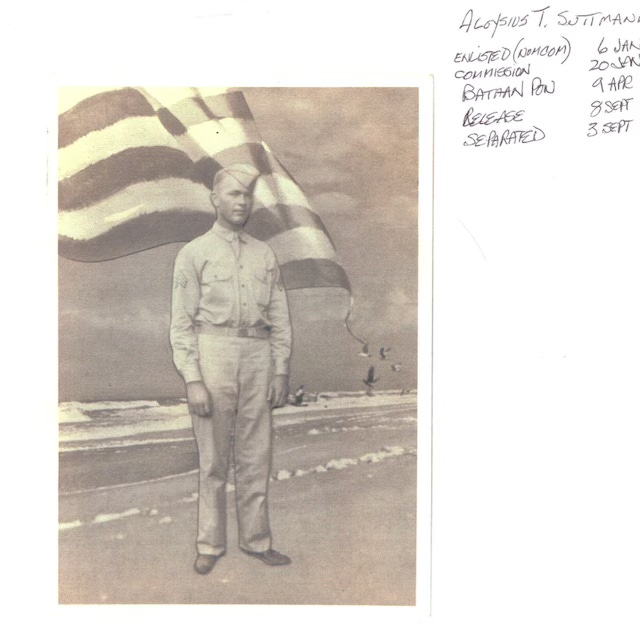
The transcript… Disc Two and Three in the book.
Shane: OK now we are up to the point... where… the war happens (stated very somberly). Pearl harbor Is invaded December 7th, 1941.
Big Al: Attacked not invaded, yeah.
Shane: Yes...
Big Al: The Philippines were invaded.
Shane: Yeah, attacked and ran. Umm… What happened on the Philippines? What was taking place there? Were you aware of this and how soon were you aware of it?
Big Al: Yes. Just before December 8th or 7th depending on what part of the world you are in because you crossed the international dateline, we… Uhm… we’re put on complete alert, so we moved out into the field where our guns were installed. Up until that time we had our guns installed along the edge of the field, but we would go back to the barracks at night. We would leave the guns out there and go back out in the morning and train.
Now about four days before… in early December we were put on continuous alert. In the day, the morning the war started, we were in our positions I was at the end of the field when the airplanes took off. The runway.
Shane: Yeah, the runway.
Big Al: On the north-south runway, I was on the South end that was where I had my guns, and the word came down that Pearl Harbor was intact. And that was 5:00 Philippine time yeah, because of the…
Shane: 5:00 AM?
Big Al: Yes, 5:00 AM Philippine time and 7:00 AM in Pearl Harbor I guess right? Yeah, we got the word that Pearl Harbor was attacked, and we should have been aware of an attack and be ready, but we weren’t (laughter) and at 12:00 we got it!
Shane: 12:00 that evening?
Big Al: No, 12:00 noon.
Shane: The following…
Big Al: No, not that day! That day! Or the 8th in the Philippine 7th (Pearl Harbor). They got it in the morning. We got it at noon. They caught all the airplanes the big bombers on the field loaded with bombs.
Shane: So, you were basically not prepared at all?
Big Al: Well, somebody failed to give the commands.
Shane: If the planes were on the field...
Big Al: The word came down that McArthur was trying to get clarification from Roosevelt to attack Formosa with these B seventeens. They were loaded with bombs, and we were able to go to Formosa with these bombers and bomb the Japanese airfields up in that area!
Supposedly the order never came but it left the airplanes sit there and they killed somewhere between 100 to 150 Army Air Corps people in those airplanes. They were just sitting there! Poor guys were waiting for the command and even the pursuit guys were sitting on the field.
Shade: They were all wiped out.
Big Al: yes, mmm…uh huh… most Of them were.
Shane: Now you were sitting at the end of this field, the runway with your anti-aircraft guns and you saw some action right up front.
Big Al: Well, the first indication was around when the mess truck had come out... I can’t even tell you what food we were going to have that day. We were going to have pork chops we were going to have potatoes and I think spinach. We had a cherry cobbler dessert or something
We’ve just gotten our food, and someone looked up and they said look at that! Though there’s two beautiful flights of our Navy airplanes! We’ve counted them. There were 27 in each flight. Which made for fifty-four and they were in V formation.
Then some guy took my filled glasses and looked up and said those are Navy planes, those are Japanese!
You could see the red dot on the fusion fuselage and about that time you get that terrible, which you didn’t know at that time, that sickening storm sound… a… Where bombs are dropping and you get that (make swooshing whistling sound). You couldn’t hear it, you know, if you are not underneath it. We were to the side of it.
And then the explosions!
All through the airplanes just anywhere up to about two thousand yards away from us. We were about one thousand yards from the end of the runway.
Shane: How many of you… wherever. We’re at the end of the runway?
Big Al: We had about Thirty. There was a platoon. Two guns. Two anti-aircraft guns. 37mm. So, there were about 15 men per gun. I was a second Lieutenant at the time.
Shane: So, you had gotten a field Commission?
Big Al: Well, I was a Sergeant on that day. I got the second Lieutenant the next day. After the war started. Yeah.
Shane: So, you oversaw the unit?
Big Al: Well, we’ve had a first Lieutenant in charge, but he got shot through the soldier then afternoon during the fight see after the bombers came in their carrier-based attack craft came in.
Of course, the machine gun the whole area including us, the anti-aircraft emplacements. They machine gun everything! Everything that wasn’t set on fire yet. They were after the anti-aircraft emplacements, the troops.
If they saw you walking around, they would strafe you. See they strafed through my position. They got the Lieutenant in the left shoulder. So, we lost him. But he didn’t die. He got back to America before they caught us. They put him on a hospital ship; you see and sent him back to America.
Shane: Let me ask you. You were talking about the sound of the bombs coming down do you recall your feelings at that moment? Was it terror...
Big Gal: Lost all my appetite… yes very much so, oh yes (To the terror question)… You lost all your appetite for food, every bit of it. And we had Filipinos (chuckles) who were the food attendants that were serving the food off the truck and after it was all over with, we never did see those Filipinos again. No one ever knew what happened to them. They just took off. There were civilians and we hired them.
Shane: So, they took off into the hills?
Big Al: Just got scared and left, yeah. It was very sickening, Oh yeah. You got sick to your stomach. Everyone got into their foxholes.
You think, am I going to throw up?!
You saw all this explosion going on. Oh…
Shane: Did you ever feel inclined to take off the Filipinos (laughter) and head for the hills?
Big Al: Crazy thing. Uhm… everyone of course got into their foxholes, see? And we had holes dug around our guns. And I had a 45 sidearm and it never forget, I couldn’t get to the hole but went where we had the ammunition buried below ground.
I went in there and sat on those boxes and shot at those airplanes with my little 45, when they came over. When they came back.
All the time I was sitting on these explosives!
So, he had no thought to other dangers that if they would have fired into that you would have exploded, see? My Sergeant, one of my other sergeants, he had his air matters perforated with three or four shots. He became very angry because he had to patch his air mattress. You know these kinds of weird things. Your pup tents were full of holes. See, we were more concerned with patching them up.
You know The funny thing is, the only person we lost in my unit was Lieutenant. And everybody kept saying you know somebody probably shot him from the ground. I don’t think they did because it wasn’t a bad fellow.
Shane: OK, we will continue now. I’ll ask you basically how long was the initial bombing…?
Big al: Well, The bombing by the bombers of course was just… over within... what… However long it takes for the bombs to hit the ground. Ahh… Two, 3, 4 minutes?
Shane: And then the planes took off again...
Big Al: Yeah, they left. They went on. And then you sat down with a kind of sigh of relief, but everything was burning in front of you. Including the hangers and the B-17’s were burning. Of course, the bombs were burning and they were exploding? Because you had a lot of action and so on.
And no one noticed when the attack craft came in, they came in within about Five minutes after the bombing attack! So, they timed it well. They came in with something like 54 to 60 attack craft.
They came within five minutes of the...(Rapid change of thought) and of course your attention was to the field which was burning and there was commotion in your area. We weren’t hit. Then suddenly, we looked up and there were the attack craft. We kept thinking it was our own craft coming back to the land.
Until suddenly you saw this fire coming at you out of the wings and they weren’t friendly. No, no, no! They weren’t friendly. No, they weren’t friendly… (somber chuckle).
Shane: did you know what kind of planes they were? Were you able to identify... What types of bombers? Did you know the classification?
Big Al: Yes, they were two engine. I don’t recall what the bombers were. But yeah, we were trained! We recognized them! The boy recognized them before the bombs were dropped quote! Luther did! They had a long fuselage. They had two inches on them. I forget what the number (identification number of them was). But we knew what type they were. And the same with the attack zeros. We knew what they were once we got involved... (pause) … Yup… We shot down seven of them that day!
But none of the high bombers. They flew right above the range of the three-inch guns which was about 18,000 feet. The bombers came in somewhere about 19,000 feet. Or three-inch guns were shooting at them. And those days we had powdered campuses and they were bursting below the bombers. We didn’t get anything. But we got seven of the attack craft with our 37mm anti-aircraft guns.
Shane: You had two guns, didn’t you?
Big Al: Yes, we had two of them yes.
Saying: how many guns were placed basically around the South end of the field where you were? And the other words were he the only guns...?
Big Al: No, no, no. At the end of each runway, they had 37mm guns along with a 150-caliber gun. And so, they (the guns) we’re at the north-south runway in the east West runway. We had one on each end. We were on the South runway. Somebody was up there on the West runway. So, We were on the South runway. Somebody was up there on the West End. You were sitting within approximately of about... Ohh, I’d say about three football fields away from the end of the runway. A little bit off to the side.
Shane: How far were you from the next unit? How far away were they? In other words...
Big Al: About a half a mile? Maybe three quarters of a mile. Yeah, it was kind of V shaped.
Shane: let me ask you your reaction as to the way the truth performed. The American troops
Big Al: OK now I must get back to one of my favorite subjects... This is a philosophy I’ve had, and I think my feeling is that the generation that was born after World War One that became the soldiers of World War II came through some very, very rigid times in that era. Plus, the fact the Society of the time is not exactly Victorian like but once the roaring 20s were over, they took on a very rigid attitude because of the depression and everything
As a result, going back to the fact you had this deep respect for authority, for your parents, for your teachers, I think that helped make one of the finest armies this country ever had
I don’t think you’ll ever assemble another group of men in that number. You are talking somewhere around ten million people that have the dedication and commitment to soldering like that group did at that time.
I really didn’t find too many bad soldiers.
I can’t think of a really bad soldier I had period hey! There were plenty of them that had fear. I had fear. And if some of them would love to run some of them did run. But the commitment to get the job done and do what you were told, even in the face of death crossing that field...
You had to be crazy to cross that field when they were firing!
That the commitment was such, the dedication was such, I’ve never seen it since and maybe never again I think it was the finest armies ever assembled, the World War 2 forces. Had to be.
Considering the odds they had to face.
Shane: the positive response to, in other words to the depression that had been so bad if they had not gone through the depression, you don’t think that the soldiers would have had it been this commitment as they were.
Big Al: Did not think we would have been as finely tuned. He was hungry. We were all hungry in those days. There was no money. People worked hard. You pulled yourself up by your bootstraps and you did it.
There was no welfare. They tied up your bank account. All you could get was ten percent of your savings. They did everything to you that was nasty and you had the will and the grit to say; we will live through this. And they did!
They came out of the depression of course in the late thirties and they began to recover. A lot of them became soldiers. Lots of them became soldiers then. Ten million of them.
Or ten to twelve million people were involved in that thing before the war was over. The greatest segment of military people in the history of this country. You get ten or twelve million involved Navy, marines, soldiers…
Shane: Yeah, that’s interesting because…
Big Al: I don’t think... I know they did not have it during the civil war period. People were buying people. Paying people to go off and fight for them in the civil war. I don’t think we had that attitude during the Revolutionary War although there were a lot of great patriots. I think the greatest wave of patriotism and commitment for this nation occurred during those years.
Shane: Could you compare it to World War one?
Big Al: I don’t think they had it in World War. I don’t think it touched this many homes in World War One. I don’t think it touches many homes in World War One as it touched in World War Two. I mean you take the example of the Sullivan boys when they lost five sons on one ship.
That touched and hurt deeply.
Shane: Let me ask you in World War II, with the outfits you served in, were there any ethnic breakup or breakdowns or as I should say, as far as the troops were concerned. Could you tell me that?
Big al: well, I happened to be in an organization where they were called Mexicans. We called them Spanish Americans at the time, but they were primarily called Mexicans. We were about sixty precent Anglo which I am, and about forty percent Mexican troops which were combination of Indians and Spanish.
And yes, we had division we had trouble all the time period. They’re always fighting each other, the boys from Texas and New Mexico. They just had this disrespect for the Mexican people. When payday came you always have problems because of this. I never could understand that and why that friction continued.
We had one or two blocks in the whole army group. Ahhh… as to the division between Irish, German and Polish we were primarily made-up of Texans and New Mexico boys, with a few from the Midwest like me. So therefore, we didn’t have any ethnic (speaking of ethnic not racial) division because most of the Texans and new Mexican people were English speaking background.
Yes, most of them were English speaking. Some came out of Tennessee and those areas but some of the southwestern people and umm… with the folks from Tennessee and there were some from Virginia, that went out to the West, they went out there before the Germans came to this country and the Irish came to this country. So, they were really Texans. Most were English speaking really.
Shane: And where they basically are recent immigrants and my right?
Big Al: You know like I just mentioned. They were some of the earliest immigrants they were descendants of the early immigrants. I think the western Anglos really are, I really do.
Shane: And you shot down...
Big Al: Well, our outfit, I got one plane but our battalion or regiment whatever you call it, we got seven planes.
Shane so you basically got those fighters down…
Big Al: Well, we call them zeros. They were one engine. They were very low wing. And very fast.
Shane: One pilot.
Big Al: One pilot. Very maneuverable. Very, very, very new maneuverable.
Shane: and our planes basically are sitting there bombed.
Big Al: They were done. They were finished.
Shane: Nothing got off the ground.
Big Al: Oh yes! I just think something like fourteen or fifteen P fighters got off the ground. But no bombers. They did er… they missed one or two of the B seventeens. The next day they were flown off to the South. They flew them into Australia because we’ve lost our air cover!
We lost our air protection! From that day on we had no further air protection! Now, we were unable to go up and attack the Japanese with pursuit or...
Shane: No retaliation.
Big Al: We didn’t have anything left! We only had something like 24 to 28 airplanes left total between us and Manila!
Shane: Did you say that the pilots were in the planes?
Big Al: Some of the crew members were in the B seventeens. And some of the pilots were in the P 40s yeah. They got hit. They died right in their aircraft burned up right on the ground. Because they started this family don’t think they called us scrambling those days, I don’t know what they call them. Almost all never got off the ground! But some did
I’ll never forget seeing five or six or Seven or eight P 40s rising right above the bomb dust. They got off just before the bombs hit the runway so, we weren’t too alert, I guess, were we? No, no, no, we learned a lot about being alert.
Vigilance and warfare is very important.
That means you had to be alert as to what might happen. We weren’t very vigilant. Even though we heard about the attack on Pearl Harbor we still weren’t very vigilant! We had to get our baptism by fire. And then we were from then on. You jumped at everything that moved!
Shane: It seems like this United States was always one step behind the attacks.
Big Al: Ohh, well we were attacked! We didn’t do the attacking, see?